
Why Boyz N the Hood is Still Relevant: A Commentary on Racial Residential Segregation in America
- Kyla Wheeler

- Oct 7, 2020
- 12 min read
"Either they don't know, don't show, or don't care about what's goin' on in the hood."
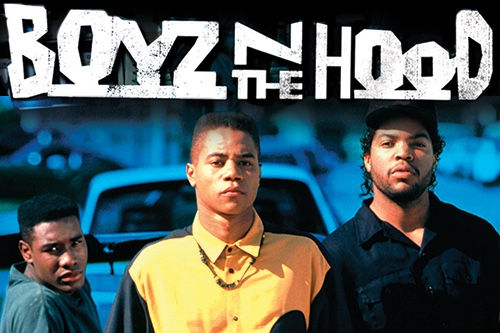
In his 1991 film, the late, great John Singleton reflects the hardships of young Black men growing up in South Central LA. The film accurately represents the lasting effects of institutional racism and perfectly captures the complexities of racial residential segregation—or the physical separation and sorting of racialized populations into specific neighborhood contexts. Inevitably, Boyz N the Hood demonstrates the multidimensional layers of the social, political, and economic consequences that Black communities are vulnerable to in impoverished, neglected neighborhoods.
Neighborhood Effects
Right away, we can already see that the Black community in this movie is living in a distressed neighborhood. Although people may not think about it much, environment matters. The truth is, where you live is very important because your neighborhood can have either positive or negative lifelong consequences; it can influence your health (physically, mentally, emotionally, etc.), socioeconomic status, and life outcomes and expectancy.
In the beginning of the film, the young boys are walking through South Central LA on their way to school. We can see the deteriorating physical conditions of the neighborhood; we see graffiti on buildings and street signs, broken windows on apartment facades, stray dogs roaming all around the neighborhood, abandoned shopping carts on sidewalks, trash littered around the streets, sidewalks, and sewers. We also see the boys trespassing an unmonitored crime scene with blood and bullet holes in the walls, and as one of the boys points out—recently spilled blood on the floor that is already separating with plasma.

Too often people blame the plight of deteriorating neighborhoods on the Black community living in such conditions, but the truth is that it has more to do with a lack of investment in the neighborhood on behalf of the government. The living conditions of South Central LA demonstrate health hazards that the community is vulnerable to. Living in distressed neighborhoods have a serious impact on life expectancy, and can even contribute to adverse health conditions and lessen the quality of life.
The living conditions of this neighborhood are unfortunately a result of racial residential segregation. The truth is, segregation has had a lasting impact on the Black community. Although these systemic disadvantages date all the way back to slavery—yes, slavery is STILL relevant and you'll see why throughout this article—its effects still remain today. Racially restrictive covenants and redlining policies forced Black people to stay segregated within their own neighborhoods, thus driving the property value down because Black neighborhoods were seen as "undesirable" areas to move into—which also made it very difficult for Black people to sell homes to move out of those areas as well.

Redlining maps were tools for mortgage lenders and homeowners to figure out what areas would be a good—or bad—place to live in. The areas colored in red meant that the area was predominately Black, which meant mortgage lenders should not lend money in that area and homeowners (and people looking to own homes) should not move into that area. Since institutional racism never allowed for an increase in property value in these areas, these areas still suffer the consequences of systemic racism and poverty today. And the low property value in these areas are also responsible for a number of negative political, social, and economic effects that are faced by many poor Black communities—and also represented in this film.
Disparities In the Education System
One of the main public institutions affected by neighborhood housing is the schools within the surrounding neighborhoods. The film depicts this by showing a young Tre in his class; while his teacher is talking, he's making jokes. She sarcastically offers to let him teach the class, and he accepts—despite the fact that the teacher probably wasn't expecting him to. He proceeds to leave his desk and teach the class that everyone originated from Africa. However, a fellow young Black student insists that he's not from Africa. After going back and forth about it, the two prepare to fight—and the young boy tells Tre that he would get his brother to "shoot him in the face". To this threat, Tre responds to the young boy to get his brother because he would call his dad on him—and the two start fighting until the teachers break up the fight.

Although it's a small scene from the film, it represents a big issue at hand in impoverished neighborhoods. The property value of the neighborhoods is what funds the schools; this means that when neighborhoods are struggling, inevitably, the schools will too. Also it's clear that there is a disconnect between the teacher and the students; the students are not truly invested in the academic material and the teacher seems more interested in getting her job done regardless of whether or not the students actually care. However, it's often not taken into consideration that low academic performance has a lot less to do with whether or not the kids are actually smart, and a lot more to do with whether or not the basic needs of the student are being met.
Often times, racist institutions give Black students dust compared to the resources their white counterparts get, yet they are still expected to disprove negative stereotypes, defy statistics, and academically achieve at great heights under great pressure. This is not to say that Black students are not completely capable of this—because they are—but look at the expectations versus the reality of the unequal distribution of resources. If young Black scholars are to grow up in a neighborhood where they are constantly in survival mode—where they lack basic needs such as food, shelter, safety, and stability—how are they supposed to genuinely focus on school? Even at a young age, the young Black scholars are rightfully preoccupied with the more important matters at hand. No one would care about something as trivial as math or grammar when they're not sure what's going to happen to them or what the future holds.
Policing
In the film, there is an overwhelming police presence in South Central LA. Tre and his dad, Furious, are robbed in the middle of the night. Furious manages to chase the robber away after shooting at him. They call the police, however, the police don't get to the house until an hour after the robbery. Ironically, despite the disproportionate levels of policing in Black neighborhoods, there is a clear lack of urgency from the police to actually help citizens. This is because helping and protecting citizens was never actually the true purpose of a police force, but rather to uphold white supremacist power structures and terrorize Black communities.
Also, there is another scene where there is a shooting at a car show. Tre and his friend Ricky try to escape and get to safety, however, they are pulled over by the police in their pursuit. The Black cop in particular uses intimidation tactics and excessive force on Tre. This is actually a perfect demonstration of why infiltration politics—or the politics surrounding dismantling a corrupt system by infiltrating it and "taking it down from the inside"—do not work. Police are actually derived from slave patrols that date all the way back to slavery—which can also show us why reform doesn't work either, as we see who is still disproportionately targeted by police—and there is inevitably systemic racism that is ingrained in the foundations of police origins that still violently affect Black communities today. A Black man joining the police force is not going to make the police force better, matter of fact, you see the Black man is corrupt with the excessive force that he is trained to do—while the white cop just stands there and watches.
What is important to understand here is the police force is not "broken", but rather it is actually working effectively because it is doing exactly what it's supposed to do. It's supposed to criminalize and terrorize Black communities, preserve white supremacy, and uphold the structures of capitalism. Notice how one cop is using excessive force and one cop is just standing and watching; there is no "good" cop, as we can see the cop who is just standing there is complicit in the terrorism and violence that the police cause this distressed Black neighborhood.
This clip from the film does an excellent job of showing exactly what we know to be true:
There is no reason to call for police reform; the police have already been reformed from slave patrols (just like the prison system allows for a reformed version of slavery due to the loophole in the 13th amendment—which we'll get into in another blog for another day—but if you see how the police and the prison system go hand-in-hand, you can put two and two together), and they still terrorize Black neighborhoods. The only way to break the vicious cycle of policing—notice I did not say police brutality, because policing is brutality, the two are meant to be inseparable—is abolition.
The "War on Drugs"
The War on Drugs is something that we hear about all the time in history class, but what we never hear anyone explain is the purpose for the War on Drugs being declared. However, we do know for a fact that the crack epidemic left devastating effects in struggling Black communities. The War on Drugs was officially declared under the Nixon administration in 1971, but Nixon's domestic policy advisor John Elrichman explains why the Nixon administration really declared the War on Drugs in a quote from his 1994 interview with Dan Baum here:

Understanding that the War on Drugs was declared to criminalize Black people gives insight as to why Black communities are disproportionately policed and Black people are disproportionately mass incarcerated at alarming rates. In the film, we see a baby wandering in the street unsupervised. Tre notices that the baby is about to get hit by a car, before he picks the baby up and takes the baby out of the street. He returns the baby to his mother, noticing that she was clearly under the influence of drugs. She seems to care very little when he tells her that the baby was basically almost killed, as she proceeds to ask him if he has any "blow" or "rocks". She offers to do sexual favors for him in exchange for drugs, to which Tre declines. This scene is meant to demonstrate the devastating effects of the crack epidemic in poor Black communities, as we also know because of the War on Drugs that addiction was criminalized in these communities instead of being met with compassion and emphasis on rehabilitation.
Food Deserts
This is an issue that is very common in predominately Black communities. Food deserts is a term that means there is a lack of access to grocery stores and healthy food options in general. Whether people realize it or not, mere access to food—healthy food especially—is a privilege that makes all the difference in life expectancy.
Anthony Iton has an amazing Ted Talk (which is linked below, I highly recommend) about how ZIP code can matter more than genetic code; this basically means that sometimes your environment can make you more susceptible to health issues rather than just your genetic pre-disposition. He points out that low-income people are physiologically different than high-income people because systemic conditions of their environment played a significant role in changing their physiology. Food deserts often reflect issues of economic inequity; notice how more affluent neighborhoods consistently have access to much healthier options (i.e. Sprouts, Whole Foods, Trader Joes, etc.). Notice how these areas are also much more expensive to shop at as well, because the property value of the surrounding neighborhoods are higher and can financially support these companies in their neighborhoods. This also means lack of access to healthy food is systemically perpetuated in impoverished communities—which also tend to disproportionately house Black communities and communities of color.

Healthier food options can lead to better quality of life and longer life expectancy, and lack of healthier food options can lead to more adverse health effects. In the film, Tre is driving through the neighborhood with his mother and she tells him, "I just don't want to see you end up dead. Or in jail. Or drunk standing in front of these liquor stores." Throughout the movie, the food options are clearly limited as you only see the characters eating what's available in their own home, eating fast food, or drinking liquor.
This demonstrates how residentially-segregated Black communities are often exploited by a capitalist government; fast food is obviously a much cheaper and more convenient option to healthier alternatives in these cases. Billion-dollar food corporations take advantage of the fact that Black people living in these neighborhoods are both spatially and financially deprived of opportunities to eat healthy foods. As a result, they disproportionately build their food chains in impoverished Black communities, and the Black people in these communities disproportionately become consumers of their products—since there aren't many food options to choose from. The food deserts create a vicious cycle of classism that hurts the Black community physically and socioeconomically, while corporations profit from the detrimental systemic conditions they perpetuate against Black communities.
Gentrification
Gentrification typically begins with the process of renovating and improving a house or district in a deteriorating area so it conforms to middle-class expectations and aesthetics. This process is also typically driven by an influx of white tenants or homebuyers, however, this leads to an increase in the property value of the surrounding neighborhood. Since gentrification typically happens in low-income communities and BIPOC communities, this is a serious problem. This basically means since the property value increases, the rent goes up. Since the rent increases with the property value, gentrification displaces the low-income, BIPOC residents who were already living in the neighborhood.
Here is a video of Black protesters expressing their outrage against the gentrification in Brooklyn during the Black Lives Matter protests in 2020. You can clearly see the demographic change, as there are many apathetic white residents outside having brunch while the Black protestors march through the city.
As a result of gentrification, many low-income BIPOC residents are forced to move out and find another place against their will—this can also result in homelessness for previous residents as well—so white tenants and homebuyers can move in. Gentrification can also result in a complete demographic change of the neighborhood; basically the opposite demographic trend we observe in "white flight".
In the film, Furious also enlightens the neighborhood residents about why South Central LA is changing so rapidly. He explains gentrification to his fellow Black residents, as you can see in the clip below.
Gentrification demonstrates a systemic power dynamic between who has the power to displace and who is being displaced. Like I mentioned earlier when discussing neighborhood effects, Black people in targeted neighborhoods are often blamed for gentrification. However, Black people in impoverished communities do not have the systemic power or resources to gentrify themselves. As Furious also gets at when he discusses gentrification with his neighbors, this is no one's doing but the doing of the white middle-class and rich white elites; understanding power dynamics is fundamental when it comes to understanding accountability on a systemic level.
Gang Violence and Proximity-Based Crime
Similar to what we see in racially segregated neighborhoods, there is gang violence and death present in the film as well. Similar to a point I made earlier, this is important because the environment you live in has a huge impact on your life expectancy. Gang violence and murder being so present in impoverished Black communities eventually lead to a term the white elites love to use so much:
Black-on-Black crime.
However! If you're to take away anything from this article, let it be this:
BLACK-ON-BLACK CRIME IS NOT REAL.
It's not real! It's an anti-Black fallacy used by white academics and white elites as a counterargument to racially-motivated murders. How often do you hear them say, "But what about Black-on-Black crime?" It's not a real thing! Lauren J. Krivo and Ruth D. Peterson say it best in their academic journal Racial Segregation and Black Urban Homicide:
"...Black-white segregation leads to higher rates of Black killing although the relationship exists only for stranger and acquaintance homicides. This suggests that social isolation, rather than social deprivation, is the mechanism by which segregation leads to higher levels of homicide among African-Americans" (1001).

This basically means the difference between white-on-Black crime and alleged "Black-on-Black crime" is that "Black-on-Black crime" is NOT racially-motivated. It's strictly proximity-based. A majority of Black homicide victims were strangers or acquaintances with their killers, which makes sense because if your neighborhood is predominately Black—that's obviously going to make up a majority of homicide victims in Black neighborhoods. Also, how were Black people put into the position of "Black-on-Black crime" in the first place?
RACIAL-RESIDENTIAL SEGREGATION.
Read the first sentence of the quote again. Yet another example of systemic racism in which white people place Black people into conditions of systemic disadvantage, and blame Black people for the very conditions they were forced into against their will. This is something to keep in mind, especially since we witness this issue all throughout the film. This is the only section I couldn't quite give a movie summary about simply because it would give important points of the plot away, so you'll really just have to see for yourself!
Final Thoughts
In conclusion, this film is timeless and I would highly recommend it to anyone interested! If you've seen the film before, I hope coming back to this article gave you insight on some sociopolitical and socioeconomic issues you may have missed in the film. If you've never seen the film before, I hope reading this article will give you context before watching the movie and allow you to pick up on other issues that haven't yet been stated in this article!
I hope this was an informative read, but don't just take my word for it—definitely check out the movie if you get the chance!
For more information, check out these informative links below!
For more information on Racial Residential Segregation (HIGHLY RECOMMEND)
For more information on Neighborhood Effects and ZIP Code-Based Health Disparities
For more information on the 13th Amendment's Loophole regarding Slavery
For more information on the Origins of Police
For more information on the History of the Drug War
For more information on Food Deserts (How Affluent Healthy Companies are Complicit in Redlining)


Comments